
Formalizing China’s Handshake Buildings
+ Brandon Fuller
The recent issue of The Economist has a good article on China’s efforts to make urbanization more inclusive. The piece focuses on the role of China’s urban villages in particular. We’ve touched on China’s urban villages in this space before (here and here), discussing the work of UP scholar Alain Bertaud. Urban villages offer parallel housing markets for China’s lower-income rural-to-urban migrants. Here’s a description from a previous post.
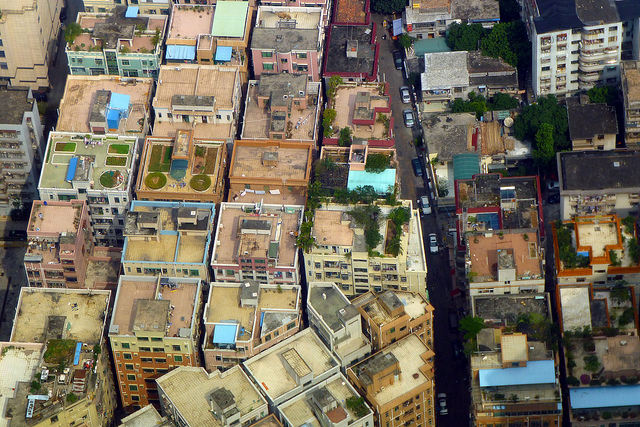
The farmers who own structures in these urban villages are not subject to the building and land use regulations that local governments enforce on urban land. They are free to adjust housing consumption standards to meet the demand coming from low-income migrants. For example, the floor area ratios in urban villages are often substantially higher than those in adjacent cities. For many new arrivals to China’s cities, urban villages have become an important source of affordable rental housing…
Because structures in the urban villages are often built close enough together for neighbors to reach out and greet one another, residents refer to them as handshake buildings. As The Economist notes, some in China see the urban villages as key to efforts to make urbanization more inclusive for poor migrants.
The Economist cites several other reforms that are receiving attention in China’s debate about how to improve urbanization.
Read the full article here.